1983 Steve Chassey

He drove a car called the Genesee Beer Wagon. He drove for a rookie woman car owner. He is one of two Vietnam War veterans to make a “500” field. He sold insurance to teams for on-track crash damage.

Steve Chassey made his mark at the Indianapolis Motor Speedway with three starts in the hallowed Indianapolis 500 and has stayed involved in different ways through the years.

He had a best finish of 11th in 1983, but he took a lot of different cars to the line, innovations, like the two-tone blue Jet Engineering Eagle, one of arguably the prettiest race cars ever to run on the 2 ½-mile oval.

“I was pretty proud of that,” he said of his ’83 finish. “In ’83, we finished the race with a stock block (engine).”

That was the Genesee Beer Wagon, fielded by Dick Hammond.

The whole experience at the Speedway is something Chassey treasures.

“Growing up in open-wheel  racing, that was the pinnacle of racing,” Chassey said of the Indianapolis 500. “In our careers, it’s what we all looked for. I love the Speedway. They treat me nice.”

Chassey built stock cars, then went into the service. He was scheduled to go to Vietnam as a communications specialist, but that changed and he became part of a howitzer battalion as a sergeant E-5. Pete Halsmer is the only other Vietnam War veteran to make the show at Indy. He was a helicopter pilot.

When Chassey returned to the United States from the war, he started racing sprinters, on his way toward the Midwest and Indy. In 1981, he drove for female car owner Lydia Loughery, but they failed to qualify for the Indianapolis 500.

Chassey started the “500” in 1983, 1987 and 1988. After he retired as a driver, he went into the racing insurance business for on-track physical damage. Generally, at that time in the late 1980s, teams figured about a crash and a half per season in their budgets.

“At one time, we had 16 to 18 cars insured,” Chassey said. “There’s not one of the teams now that I know of that is insured for on-track crash damage now. They look at the premium and say, ‘I can buy a whole car for that.’ But what if you knock off the same corner four or five times during the season?”

Chassey moved from Indianapolis to Glendale, Ariz., in October. He was elected a year ago to serve on the Board of Directors of the Indianapolis 500 Oldtimers organization.

He would get back into insurance if he found a company that wanted to get involved in motorsports. And he’ll certainly be at the Speedway this month.

Billy Boat 1998

Billy Boat went through some trials and tribulations before he grabbed the pole position for the 1998 Indianapolis 500.

“We crashed in practice right before qualifying,” Boat said. “I knew we had the speed, but we had some other issues. I knew we had an awesome race car.”

The pole came when the legendary A.J. Foyt gave Phoenix native Boat his shot at Indianapolis.

But mechanical problems in the race kept Boat from Victory Lane that year. But the pole was quite an achievement, and kitchen magnets featuring his picture appeared the next year.

“Any time you can see the leader with 25 laps to go, you’ll have a shot to win it,” Boat said. “We had the best car in ’98.”

In 1999, Boat finished third, his best in seven starts at Indy.

“The third behind Kenny (Brack) was a great accomplishment,” Boat said. “In the heat of the moment, you always want to win.”

Boat joined IndyCar at a time when opportunities opened up for sprint and midget drivers around the country.

“That was always my goal,” he said. “I was at the right place at the right time. I was happy to be there. I did my own team with Cary Agajanian and Mike Curb in 2001 and 2002. But for 2003, the budget was going to go from $1.8 million to $3 million, so we just couldn’t do it.”

Boat was operating an automotive exhaust business in Phoenix before he came to the Speedway.

“I started Billy Boat Performance Exhaust in 1990,” he said. “Since then, I’ve taken a more active role in the company. We work on Corvettes, Camaros and BMWs, high-end performance cars.

“My son Chad was only 8 or 9 when I was racing Indy cars, and I’ve taken an active role in his racing. Now he’s living in North Carolina. He’s going to be 21, and he’s been running some NASCAR and ARCA. He hopes to be in the Nationwide Series next year.

“My brother Mike is still here doing sales for us. My daughter Trisha works in the social media department for Chip Ganassi in Charlotte. My other two daughters, Emily, 17, and Brooke, 18, are into cheerleading, and Brooke goes to Arizona State next year.”

Boat said his IndyCar Series victories at Texas were rewarding, and he was in Victory Lane with Foyt in ’97 when a scoring question arose and Arie Luyendyk came to Victory Lane with his team to protest. A.J. promptly shoved Luyendyk into a flower bed. Through a long audit, Luyendyk was declared the winner.

But Boat confirmed something that has floated around the paddock for a long time: A.J. still has the trophy.

Every Memorial Day a flood of memories comes back to me.

I grew up on the west side of Indianapolis. In high school we would skip school and go to Carb Day and have a blast. We really didn’t watch much of the track action to be honest. There was too much to watch in the infield!

I remember walking through the infield and seeing Mario Andretti’s transporter and watching them load it.   We started talking towards the guy standing by the transporter and realized it was Michael Andretti himself!  This was before he raced at Indy and he was working for his dad. He was a very nice guy, he answered all our questions. You would have never guessed he was racing royalty. It was just like talking to my neighbor. This was back when the Coca Cola field was filled to capacity days before the race.  In the mid to late 80′s.

Balloons on Indianapolis 500 Race Day

A few years after high school I met my girlfriend,  her grandfather was a car owner. Most of her family was involved with the team. Her brother and dad were members of the pit crew.  It was also interesting to hear the gossip going on behind the scenes. They would always chat about what they were struggling with to get the car setup and ready to compete. The guys basically lived at the track the whole month, sometimes working around the clock. It was pretty intense. A few times when I was at the shop I was asked to help them load the transporter before they headed out to a race. I remember bracing myself to pick up a rear wheel as if I was picking up something heavy and the wheel practically flew up in the air. I was amazed something that big could be so light.

The whole month of May was special. Lots of energy in the city, tons of nightlife, race parties etc.  Nonstop fun.  It wasn’t uncommon to see celebrities out on the town during the month of May.

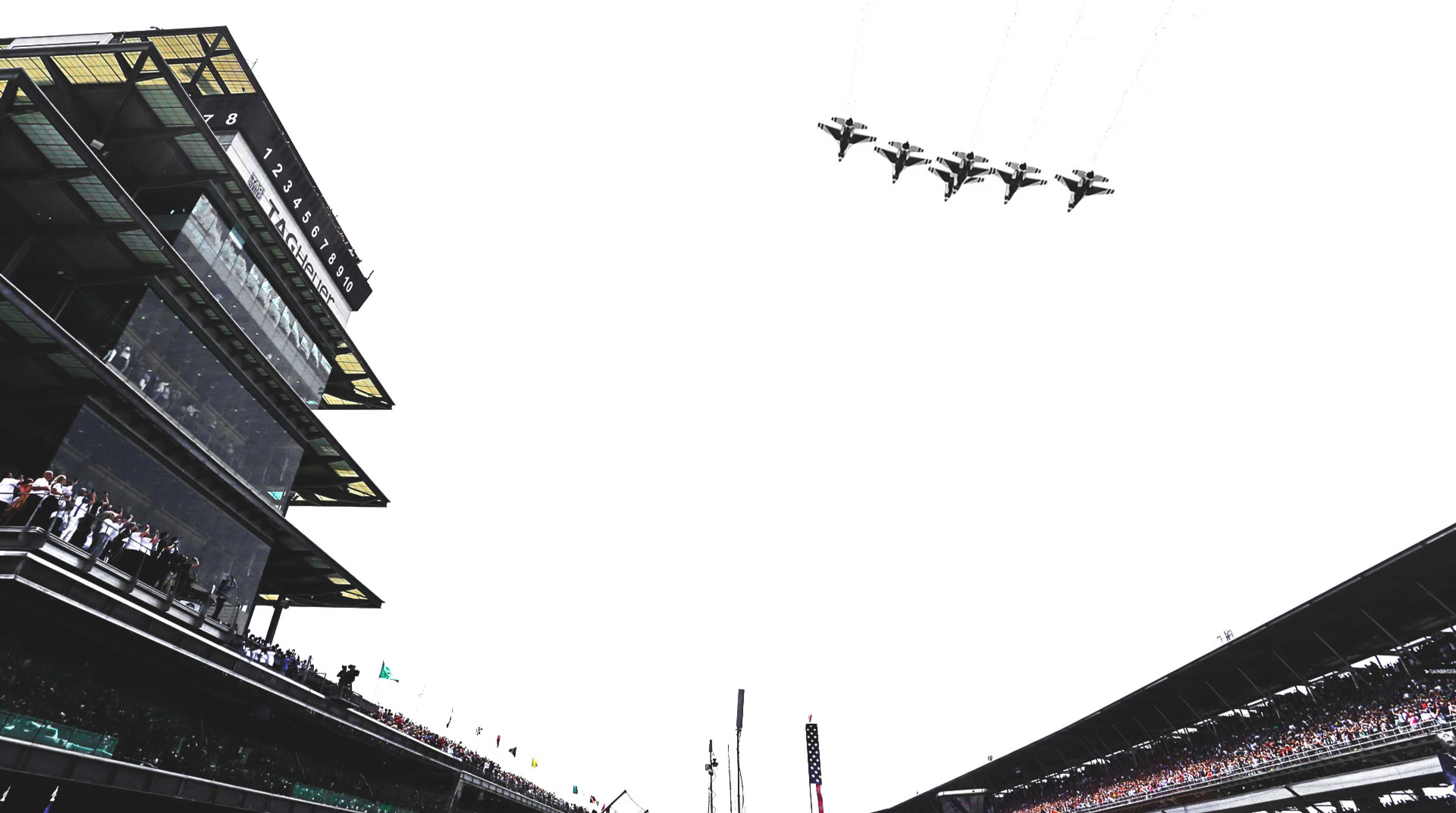
Years later I was forced to move from Indianapolis after being laid-off from my job. Since then I have traveled all over the country as a computer consultant for the last 12 years. I try to make it back to the 500 every chance I get. It always reminds me of all the great times I had when I was younger. When the balloons fly and the fighters fly over – there is no way you can resist being proud to be American. To this day, the spectacle of the Indianapolis 500 is one of the most electric things I have ever witnessed.

I’ve been to the 500 several times since I left Indy. I always park in the same complex that I lived in back in the day and walk the same path I did back then. I love taking in the sights and sounds of the race. Of course I have to pick up some White Castles and some King Ribs to make my trip complete. I can’t explain it, but my eyes always tear up during the invocation. I will always miss it. Sitting in the stands, getting burnt to a crisp. And having not a care in the world.

When I am unable to make it back to Indy for the 500, Memorial Day is filled with mixed emotions.   It’s just not the same watching it from 1000 miles away. I remember when I was a little kid we would sit out in the back yard listening to the cars engines roar in the distance (probably 10 miles away) and listening to the race on the radio.

It was a great time to grow up in Indianapolis. Thank you for the memories and giving me one more thing to be proud to be a Hoosier and most of all, an American.

- Chris

Gary Bettenhausen 1980

It was a family affair that lasted for several decades, and the Bettenhausen clan became legendary at the Indianapolis Motor Speedway.

It was also a sport that wasn’t kind to them. The family patriarch, Melvin “Tony” Bettenhausen, died in a practice accident in 1961 at Indianapolis.

Gary Bettenhausen followed in his father Tony’s footsteps to Indy and made 21 starts in “The Greatest Spectacle in Racing.” His favorite race wasn’t 1972, when he led 138 of the 200 laps and fell victim late to mechanical bugaboos.

It was 1980.

“Probably more so,” said Bettenhausen, 71, from his Martinsville, Ind., home. “We took a 5-year-old car, started in the last row and finished third. We changed two tires the whole race, had no radios, so we used hand signals. It was an old Patrick car that Wally Dallenbach had driven.

“Sherman Armstrong already had four cars, and we really didn’t have any time in it. We changed the fuel injection and other things for Race Day, and it ran like a rocket.”

That was his best finish at the Speedway.

Bettenhausen was handicapped by a left-arm injury from an accident on the dirt mile at Syracuse, N.Y., but it didn’t stop him.

“A whole half of my career was with one arm, and I won the dirt title twice,” he said. “My first race back was a 100-lapper indoors at Fort Wayne, and I won it. I got smoother, and that helped me. The first couple years, I couldn’t drive it down the straightaway. As the years went on, it got stronger. For a while, I actually used Velcro on my glove to hold my hand on the wheel. I learned how to compensate.”

In 1992, the paddock was buzzing before the month of May even started. Bettenhausen was hooked up with Nelson Piquet as his teammate. Everybody wondered what stories would come out of the matchup of the sophisticated former Formula One road-racing champion paired with the master of the American dirt oval.

It was surprising. There weren’t any stories.

“It was quite an experience,” Bettenhausen said. “It took about five minutes to decide we liked each other. He’s a fun guy to be around. He called on my birthday or around Christmas two years ago out of the blue. His son is running NASCAR’s Nationwide series, and I watch him all the time.”

Gary B said he doesn’t miss racing in Indy cars.

“Nope,” Gary said, “not the way it is today with all the computers. Half the fun was getting a car set up.”

His brother Merle, who also raced, retired last year as marketing manager for auto dealer Ray Skillman. Sadly, his youngest brother, Tony Jr., was killed in a plane crash in 2000.

Gary’s twin sons, Cary and Todd, started a health-care business and patented an innovative tray that allows surgeons to have tools in exactly the right places when they come out of a sterilizer.

Sadly for his legions of fans, Gary said he doesn’t come by the Speedway anymore.

“It’s too hard on my legs and back because I’m not walking very well,” Gary said.

But the fans never will forget the popular Gary B.

Although I grew up in Alabama, my father was a Hoosier.  In fact, you could say that he was a Hoosier’s Hoosier.  My great uncle once told me that the definition of a Hoosier was a guy dribbling a basketball around the Brickyard looking for mushrooms.  Could have easily been my Dad!  Anyhow, when he and my Uncle returned from WWII, they started attending the Indy 500.  For many years they watched from the infield, because they could not afford bleacher seats.  I remember vividly hearing of one race where they moved around the infield and everywhere they stopped to watch, a wreck happened!  They definitely felt like “The Flying Dutchmen” that day!

1967 Indianapolis 500

For some years they worked on the safety crew because, by this time, my uncle was the fire chief of Bainbridge, IN.  When they finally achieved some affluence they started getting reserved seats.  They basically saw every race between 1946 and 1970, and missed in 1971 only because my sister graduated from high school in Alabama during race week.  They were back again in 1972 but missed again in 1973, when I graduated.  The two of them had practically photographic memories from races and could describe details of individual races with such precision that you’d swear you had been there yourself.

As I was growing up, attending the 500 with my dad and uncle was a rite of passage for all of us kids, and 15 was the magic number.  On May 29, 1967, however, the night before the race, my dad told me that I was going to get to go the next day.  I was only 12!  I didn’t sleep a wink that night and watched the race get called for rain with Parnelli Jones beginning to dominate the field in the #40 STP Turbocar from Sec 20, Row LL, seat 5 in the Paddock.  We were back the next day to watch the race resume and I’ve been hooked ever since.  While I was in college, several times we would leave Chattanooga, Tennessee, drive all night, drive into the line to park, watch the race and then drive back to Chattanooga to go back to school!  For many years, I watched from the infield and even took my new wife to the race on our honeymoon.

For the most part, the only races that I’ve missed since then were because I was stationed overseas with the army, from 1981-84, 1991-1994 and 2000-2003.  I can vividly remember being on duty in Germany and listening to Rick Mears winning his second race on the Armed Forces Radio Network in 1984.  When we returned from Germany in 2003 I took my son to his first race in 2004: Paddock, Box 63, Row H, Seat 1.  I’m now 57, and I hope to see every Indy 500 until I die and when I’m buried, there will be two tickets to the race in my breast pocket.  It runs in my family and it’s in my blood.

-E.J.

Jack Hewitt 1998

USAC short-track legend Jack Hewitt was excited when he got to the Indianapolis Motor Speedway, excited while he was there in 1998 and is still excited now that he has participated in “The Greatest Spectacle in Racing.”

When he reached the Speedway in 1998, he was more than moderately on top of the world.

“I only grew up 100 miles from there,” he said. “When you set goals in life … I wanted to drive sprint cars, wanted to race in Australia, which I did for 11 winters, and wanted to run the Indianapolis 500. That was my final goal. The first time I drove around the Speedway, I was thinking, ‘I have to be blessed.’”

Hewitt, from Troy, Ohio, was the “purest” of race drivers. He would drive anything, anywhere, all the time.

“I probably ran 150 features one year,” Hewitt said. “That’s the most I’ve ever done in a year. If I could’ve squeezed in a couple more, I probably would have.”

Two-time USAC Silver Crown National Champion Hewitt, now 61, drove the PDM Racing car in 1998 at Indianapolis as a 46-year-old rookie. He got a lot of help.

“I think I was in with a good bunch of guys,” Hewitt said. “Al Unser, Gary Bettenhausen … a lot of my heroes were there to help me. Johnny Rutherford took me around and told me it was a lot like Winchester. After he told me that, we picked up speed. Paul Diatlovich (owner of PDM) was showing me on the computer what I was doing and I was able to understand it better after JR talked to me.”

The first “500” Hewitt remembers was in 1963, when he walked past his father, who was listening to it on the radio. Parnelli Jones won that year and carried No. 98. Hewitt and PDM carried No. 98 at the Speedway in 1998.

Hewitt’s Indianapolis 500 career started ominously. He crashed on the first day, and the PDM crew rebuilt the damaged machine. He was back on track Wednesday.

“You never give up from your dream,” he said. “I got to hang out with Florence Henderson and Jim Nabors. I was so paranoid about pit stops because I didn’t want to kill the motor. If you’re a race driver, I don’t think it makes a lot of difference what you drive. It’s just another style of racing. In my whole career in sprint cars, I was smooth and patient.

“It was a dream come true. You have goals, and racing in the Indianapolis 500 was one of them. It’s just amazing how many get to do it. I got to be a part of it, and I got to race there. Basketball, baseball … a lot of people didn’t reach their goals. I’ve led a fantastic life.”

On Race Day, many of Hewitt’s fans from short tracks around the Midwest were on hand. Hanging signs from the grandstands is discouraged at IMS because they block the view of other ticket holders, but that didn’t stop Hewitt’s Heroes from hanging a huge bedsheet from the railing of the upper deck at the end of the front straightaway that sported the words, “Do It Hewitt,” a phrase frequently heard over the public address at American short tracks.

Hewitt became the oldest rookie starter in Indianapolis 500 history, a record surpassed only last year by Jean Alesi, 47. Hewitt started 22nd and finished a respectable 12th in the Parker Machinery entry, completing 195 laps.

“It was such a Hollywood script,” Hewitt said. “I ran all day.”

The year 1998 was a big one for Hewitt in another way as well. In the 4-Crown Nationals at Eldora, he won the midget, sprint Silver Crown and modified features.

“It was the most unbelievable achievement in the history of motorsports,” said USAC executive Dick Jordan. “Absolutely incredible. In four different cars … he even wore four different helmets.”

Hewitt suffered a neck injury in 1993, and a second injury in 2002 caused him to retire.

“I’ll be 62 in July,” he said. “I’ve had a wonderful career. I’ve been blessed. I’d still be racing to this day if I hadn’t gotten hurt.”

He developed a two-seat sprint car that he takes to various races so customers and VIPs can experience the thrill of short-track thunder.

“I’ve got a 5-year-old grandson and my son, Cody, who’s 29, ran a sprint car all last year and for having one arm, he did really fine.”

Buzz Calkins and crew.

Buzz Calkins will always be in the record books.

He won the Indy Racing League’s first race in 1996 at Walt Disney World when he held off Tony Stewart. It was the first IndyCar race for both, and there aren’t that many drivers out there who can say they beat “Smoke” in a competitive scenario on a racetrack.

“It was one of those days when everything was pretty much good all day.” Calkins said. “My engine was overheating, but we overcame that.”

Calkins always looked toward the Indianapolis Motor Speedway, where he made six starts, led four laps and had a best finish of 10th in 1998 for his family-owned Bradley Motorsports team.

“When I went there for the first time in 1987, when I walked into the place, I knew it was something I wanted to do,” Calkins said. “My dad bought me a go-kart when I was 14 years old, it started going well, and the rest is history. When I started out, it was my ambition to race in the Indianapolis 500.”

Calkins was always popular with the fans and those in the paddock.

At Indy for his first race there in 1996, he was talking to an INDYCAR official just outside the garage area, and the official suggested he go out to pit road and sign a few autographs.

“That’s where I’ve been for the last two hours,” he said with a smile.

After the duel with Stewart at Walt Disney World, Calkins asked public relations rep Jim Dinsmore if he and Tony had anything in common, that he’d like to get to know him better. Dinsmore knew both played pool, and the result was a charity 8-ball game at a casino in Las Vegas.

“That’s the thing I liked the most was the people,” Calkins said. “You guys, officials, mechanics, drivers. That’s something I’ll always look back on. I miss the people as much as anything.”

Calkins, from Denver, shared the first Indy Racing League season title with Scott Sharp. But he treasures the experience at Indy.

“I don’t think anything compares to it,” he said. “I don’t think anything compares to the first five laps and all the people who come out for it. I don’t think you can prepare yourself for it. It’s hectic, and I can’t think of too many things in life that can top it.”

He’s “retired” now although he said he runs a charity race every once in a while. Instead, Calkins  has gone from the track to the boardroom and family life.

“I got married and have three girls,” he said. “Bradley is 8, Marin is 6, and Harper is 3.” Two years ago, he was named president of Bradley Petroleum, a 100-year-old family-owned company.

“I won’t wear ties, but I wear a lot of different hats,” Calkins said. “When there’s a need someplace, I’m in it. I’m pretty much running the gas business, and we just signed a deal to build 12 Dunkin’ Donuts facilities in the next five years. That and real estate. It’s challenging and interesting.

“Between family and work, I don’t have time for anything else. I try to come back every year for the race. I’ve thought about (being a car owner), but with time constraints and I’d want to do it right.

“Maybe (in the future) I’ll have more time.”

It was a long journey in a short time.

Coming off the fourth turn in the Silver Crown race in the 1997 Copper World Classic, veteran Chuck Gurney had the lead. But unknown Jimmy Kite jumped under him and beat him to the line for the prestigious victory.

After he got out of his car, Kite came running down the frontstretch at Phoenix International Raceway to the delight of the crowd because he was looking for Victory Lane – and didn’t know where it was.

“Before that race, no one knew about that 20-year-old kid,” Kite said, “but afterward, everyone knew.”

Six months later, he was in an Indy car at Pikes Peak. And in May 1998, he came to the Speedway in search of his first “500” berth. But it didn’t start out well.

“It was the first year they condensed the schedule,” Kite said. “We tried to get as much running as we could. I crashed three times that week, the last on Pole Day. So I had to watch my crew rebuild the race car again and it was my first Indianapolis 500, and I wanted to make a good showing.”

Even after the crashes that first year, Kite finished 11th and made four more starts in the prestigious race. He was hooked up with PDM Racing for a time, but bad luck struck again.

On Bump Day in 2002, Kite and the PDM machine were fast enough. But they got caught at the head of the line when rain came and didn’t get a chance to qualify. For three hours, pictures and video were being shot of Kite, umbrella over his head, sitting down against the right front tire of his parked race car.

His last start at Indy came in 2005. He failed to qualify in 2007 with PDM.

But Kite still has no regrets and still aspires to compete in “The Greatest Spectacle in Racing,”

“I’ve got five (starts) and always will,” Kite said. “I told Davey Hamilton, who was 47 at the time, I wanted to run again and I was 37, so I figured I had 10 years left. It’s not like I’m not staying in shape. If you can get around Winchester in 13 seconds, you’re ready to step in an Indy car.”

Racing the Indy 500 was one of his goals as a youngster growing up in the Midwest.

“Every year, my dad would take me to qualifying day,” Kite said. “Then he got some suite passes for Race Day. I told him, ‘No, I’ll go to the Indianapolis 500 when I’m driving in it.’

“My first impression, it was a clear day, and I came off Turn 4 thinking ‘Man, that’s a long straightaway.’ I still get excited thinking about Turn 1. You go into Turn 1, it’s a handful.”

As a rookie in 1998, he was the target of the usual pranks.

He walked into a restaurant one night and saw a bunch of people. He stopped to talk, and one of them said: “Hey, you have to go talk to those two people at the end of the table. They have a ride for you.” So Kite hurried down and approached the people. Everyone started laughing.

The two people were Dr. Richard Burmeister and Starre Szelag of the Iditarod Trail Sled Dog Race.

Kite has kept very busy, running with ARCA and NASCAR’s truck series on occasion as well as the USAC Silver Crown and Sprint cars. The sprinters will be his May concentration with the Little 500 at Anderson and Winchester on the schedule.

But Indy is the place for Kite, now 37.

“I’ve been the last couple years, and I’ll definitely be there this year,” he said.

My personal journey to the Indianapolis 500 began before I could even realize it.

It was way back in the early 1960s when I was too young to remember most things growing up in the Northern Indiana community of Koontz Lake. The youngest of five kids, I was the last of the line for a hardworking ironworker named Homer Martin. At that time in America, it wasn’t unusual for a family to have five kids, although today it would probably be scrutinized for one reason or another. But it was a great time to be a kid because my mother, Dorothy, was a full-time mom and housewife, so I had the traditional “Leave it to Beaver” type of upbringing.

My father taught me several things that I take with me today, among them how to be a sports fan and the other was to hate the Chicago Cubs, which I continue to do to this day. Going to a baseball game in Chicago meant the South Side – Comiskey Park – home of the Chicago White Sox.

Dad wasn’t much of a gearhead, which may seem strange since I would be interested in high-speed racing machinery. The 1959 Ford served as the family car until the 1964 Ford made its way into the driveway for a brief time. He kept it for about a year but noticed the aqua-colored paint scheme was two-toned upon closer inspection of the front fender and the rest of the car. So it wasn’t long before a gold-colored Ford Custom 500 became the new family ride.

When I was just over 1 year old, my oldest sister, Nancy, began her freshman year at Indiana University in 1960. She would soon meet a boy who graduated from Warren Central High School in Indianapolis named Jim, and that is how my interest in the Indianapolis 500 began.

Jim had been attending the Indianapolis 500 for years with his father, and whenever my sister and her boyfriend would come to visit, I would hear him talk about the Indianapolis Motor Speedway and that year’s race. He also talked about his favorite driver when he was growing up, although I thought the name sounded a bit odd.

Bill Vukovich.

Remember, I was quite young at the time, so the memories are like old black-and-white snapshots that have faded over time, but that is when my curiosity began about the Indianapolis 500.

As Nancy and Jim became more serious, they decided to marry in 1963. She attended her first Indianapolis 500 with Jim in 1962 to witness the second of Rodger Ward’s two Indy 500 wins. I remember the name Parnelli Jones being mentioned as a mere youngster, and I wondered what this big event they talked about was all about.

As a 5-year-old in 1964, I experienced the danger that existed at the Indianapolis 500 at that time. I’ll never forget the front-page headline in the May 31 edition of The South Bend Tribune that said “Sachs, MacDonald Die at Indianapolis 500.” Underneath the headline was a picture of this huge fireball on the frontstretch of the Indianapolis Motor Speedway with spectators just behind the flames.

Remember, this was the 1960s. It was a different era where the working man of that time had fought in World War II and returned home to build the United States into an economic power. These brave men had seen death face-to-face in their battles in Europe and the South Pacific. It was also during the Cold War where a youngster’s toys were tanks and planes and warships and toy guns – something far different than today’s society. We even played cowboys and indians – something that would likely get us kicked out of public school today.

The point is I was fascinated at both the headline and the photo. The element of danger at the Indianapolis 500 was part of its lure; that brave men would willingly strap themselves into fuel-filled bombs that raced around the track at over 150 mph. This was also a time of the Space Race, and I made sure I was in front of the television set every time a Project Gemini launch was about to happen from the newly-renamed Cape Kennedy.

Race drivers in the Indianapolis 500 were in the same category of bravery as John Glenn, Alan Shepherd, Gordon Cooper, Gus Grissom, Frank Borman, John White, Wally Schirra, Jim Lovell or any of the other astronauts of that era who displayed “The Right Stuff.”

Even though I lived in the same state as the Indianapolis Motor Speedway, it may as well have been as far away as the moon. My father had little interest in ever attending the race and would have probably found the entire experience to be more or an expensive, day-long headache than anything else.

The closest I was ever going to get to the Indianapolis Motor Speedway as a kid was when we traveled from Northern Indiana to Bloomington to visit my sister and her husband. It was always a highlight of the four-hour car ride to be on I-465 and see the Speedway exit for Crawfordsville Road as I looked out the window from the back seat of the old Gold ’65 Ford Custom 500 drove on by in what was literally a “so close, yet so far away” moment for me.

I would also notice something unique that happened in the spring when a bright orange temporary road sign would be placed on I-465 that said “500 Track Next Two Exits.”

Somewhere around the mid-1960s, however, I remember my brother David would turn on a radio every Memorial Day, and I could actually hear the race. It was Sid Collins’ voice on the “World’s Largest Radio Network” telling the world about what was going on in the Indianapolis 500 with the roaring sounds of engines in the background. To me, it had all the drama of a Titan II rocket with a Gemini capsule and two astronauts on board. To hear this event on the radio was a bigger-than-life experience as we fired up the old charcoal grill for a Memorial Day cookout.

David was the next-closest to me in age but was 6 years older than me. He was lucky enough to go to Indianapolis 500 “Time Trials” as it was known back then in 1966 and 1967 with Jim. I was considered too young at the time to go on such a journey – perhaps my parents were wise enough to have heard about the “Snake Pit” and didn’t think that an 8-year-old should see such things. And this was back in the days when “anything goes” in the Snake Pit.

More than likely, it was just a case that I was too young to attend an all-day and all-weekend event such as this.

I remember when the Channel 2 News in Chicago had as the lead story the start of the Indianapolis 500 and this massive crash in 1966. I was fascinated at the pictures of wheels flying in the air and the sight of A.J. Foyt climbing over the fence. Despite the massive crash at the start, Foyt suffered the only injury – a cut on his thumb from climbing the fence.

Way back then, there were only three ways to see the Indianapolis 500. The first was to be part of the massive throng of 300,000 fans that filled the grandstands and the infield. The other was to go to a theater that had a closed-circuit telecast from MCA of the race. And the third option was to wait about four weeks after the race when ABC finally showed it on “Wide World of Sports.”

Every Saturday after the race, I would make sure to have the TV on “Wide World of Sports” only to be disappointed that it wasn’t on that weekend’s show. I got my fill of track and field, lumberjack competitions and the demolition derby from Islip Speedway in Islip, N.Y., featuring Chris Economaki before the right weekend came around with the Indianapolis 500. Little did I know that decades later I would actually work for Economaki at National Speed Sport News, and he would become a journalistic mentor.

But this is how I saw the STP Turbine and Parnelli Jones coming four laps short of winning the 1967 race before an engine bearing failed leaving his car stranded at the north end of the track. I remember a few weeks earlier that was who my brother David wanted to win the race. Instead, it was Foyt who claimed his third Indy 500 win. I also remember Foyt on the cover of Sports Illustrated after that third victory.

It was also how I knew about Bobby Unser’s 1968 win when another turbine-powered car driven by Joe Leonard conked out near the end of the race.

I had another sister named Linda who had married a bright, young engineer for General Electric in Fort Wayne, Ind., named Ron Krol in 1967. They, too, had attended the Indianapolis 500, and I remember his favorite driver was Mario Andretti.

There was tremendous glamour attached to Mario Andretti. He looked like a movie star and had all the allure of James Bond.

Linda and Ron came up to Koontz Lake for Memorial Day in 1969, and I remember as a 10-year-old that Ron had the Indy 500 on the radio in his car when Mario Andretti won the race for his only triumph at Indy. Ron was excited that his favorite driver had finally won the Indianapolis 500.

By 1970, I used to anxiously await the delivery of the afternoon paper to the house – The South Bend Tribune – so I could read about what had happened at the Indianapolis 500 in practice and qualifications. An ambitious kid, I got to know the sports editor of the Plymouth Pilot News named Harold Lowe, who was a huge Indy 500 supporter and covered the race despite the small size of the Pilot News. He even had a Firestone tire from the rear wheel of an Indy car with glass on top to make it a coffee table.

Something grand happened in 1971 when ABC decided to show same-day coverage of the Indianapolis 500. Again, Linda and Ron were up to visit, and I got to hear the race live on the radio when we made a trip to South Bend on a Saturday afternoon. Then that night we got to watch the race on ABC.

No more waiting for weeks to actually see it – we only had to wait until that night.

And it was a fascinating experience filled with some spectacular crashes and daring racing as Al Unser won his second straight Indianapolis 500.

The next night, believe it or not, my father along with Ron and I went to Plymouth Speedway for a Sunday night Memorial Day Weekend race. It’s the first time I ever recall my dad being interested in something like that.

When Richard Nixon was president, Memorial Day was moved from May 30 to the last Monday of the month of May. From 1970-72, the Indianapolis 500 was contested on a Saturday. Tony Hulman, the owner of the Speedway, did not want to run it on a Sunday out of respect to the local churches in Indianapolis. So it was a Saturday afternoon when Mark Donohue gave team owner Roger Penske his first victory in the Indianapolis 500. Gary Bettenhausen could have won the race before his engine blew up while leading on Lap 176. That put Jerry Grant into the lead, but he was penalized for his final pit stop when the crew refueled Grant’s car out of teammate Bobby Unser’s fuel tank. Grant finished second on the track, but the penalty dropped him to 12th place for his ill-fated pit stop on Lap 188, as all laps after that pit stop were not credited to Grant.

In 1973, IMS officials decided to schedule the Indianapolis 500 on the actual Memorial Day Monday, and it proved to be a grim experience because of rain and a horrifying crash at the start of the race on a Monday before it rained again that day. It rained on Tuesday, and the race was finally held on Wednesday. Sadly, it was another grim day when Swede Savage crashed in the fourth turn and a crew member was killed when he was hit by a safety vehicle. Gordon Johncock was in the lead when the race was finally stopped for more rain and was declared the winner in a race that nobody celebrated. ABC was on the air all three nights, and I made sure to watch every night.

By now, I was 14 and more than old enough to experience the Indy 500 for myself. But few of my friends were interested or had the means to go to the Indy 500, and my father simply wasn’t going to go, even if he could get tickets.

By 1974, the Indianapolis 500 was scheduled for Sunday after Hulman got the blessing of local churches in Indianapolis. I remember rushing out of church at 11 a.m. to make sure I could hear the start of the race on the radio.

The year 1977 was special for me because I graduated from Oregon-Davis High School on May 22, and the following week A.J. Foyt won his fourth Indianapolis 500 on May 29. It was a historic moment that had been highly anticipated since Foyt won his third Indy 500 in 1967.

I would attend Indiana University beginning in 1977 and begin my path to a journalism degree. As a liberal arts school, the Indy 500 wasn’t something that was at the forefront of many students minds although many of the 500 Festival Queens and Princesses were IU students. The school year ended in early May at IU, and with the race at the end of the month, many of us were already scattered across the country to return home for the summer.

Over the next few years, though, I was determined that I would one day make it to the Indianapolis 500. To me, it was Indy 500 or bust.

I came close in 1980, nearly talking some of my friends in Plymouth, Ind., to leaving town on a Saturday night to party all night outside the Speedway gates and go into the infield before they changed their mind.

Finally, in 1981, I made sure that one way or another I was going to the Indianapolis 500. I had a few college buddies of mine from South Bend that were already going to the race, so I joined in. We met on the northside of Indianapolis where we attended a house party before making the trek to 38th Street and Lafayette Road. I was amazed that traffic had come to a complete stop at Lafayette and 30th Street. We were still several miles from the “North 40” as it was called back then. It was midnight, and the gates would not open until 5 a.m.

The atmosphere was like Woodstock must have been, with tens of thousands of people all with the same goal – getting into the infield at 5 a.m. and staking out a spot for the Indy 500.

There would be no sleep this night, just the raucous atmosphere as the line of traffic crept along before the aerial bomb exploded at 5 a.m. signaling the opening of the gates. It would be another 1 1/2 hours before we made it through the tunnel, and it was still like the Oklahoma Land Rush as cars sped through the infield grass to find a location to park.

I got as close to the fence inside of the fourth turn and threw down the blanket at 7 a.m. The race was still four hours away, and that is when the all-nighter began to hit. But the sights and sounds were amazing as fans continued to drink and fire up the grill. Nothing like seeing pork chops, ribs and burgers being cooked and consumed at 7 a.m.

There was plenty happening in the infield to keep us entertained as the Cavalcade of Bands marched around the track and the booming voice of Tom Carnegie was on the public address system. As 11 a.m. neared, the traditional ceremonies began, although from our vantage point you couldn’t see them.

Finally, the command was given to start engines and the sound of 33 engines could be heard off in the distance.

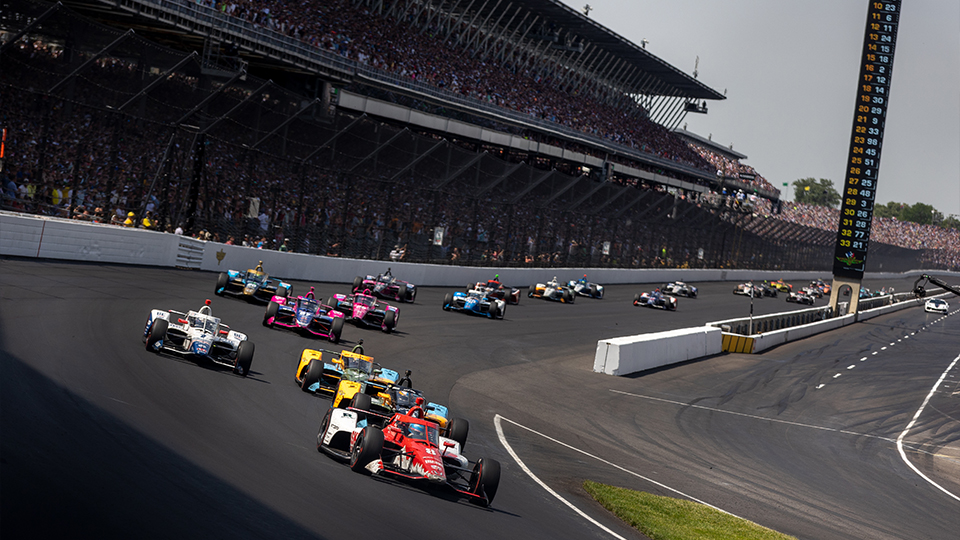
It wasn’t until the first parade lap that 22 years of waiting became a reality as the Pace Cars drove by with the field of 33 cars from behind. The sight, the sounds and the color were incredible. It sounded like a beehive that had been amplified 10,000 times with a few stock-block Chevrolets thrown in. And this was just the parade lap.

The pace quickened on the Pace Lap until finally, the race was about to begin.

The first time by the cars were so fast and so loud it was hard to imagine there were actually men strapped inside of each one. It was an adrenalin rush I had waited a lifetime to experience. It was when the Indianapolis 500 became an addiction to me.

I would pay close attention for the entire race although I could only see the inside of Turn 4. Bobby Unser would go on to win in controversy for his third Indy 500 victory. I jumped in the car after the race and drove back to Koontz Lake hoping to get home in time to see the race again on ABC. This way, I would find out what had happened on the other parts of the racetrack – something those of us in the infield only knew about by listening on the radio.

I had finally made it to my first Indianapolis 500 although I knew at the time it would not be my last. The next year, I went to Pole Day for the first time. I would return to the same spot in the infield for the 1982 race and vividly remember seeing Rick Mears cut into Gordon Johncock’s lead each lap over the final 10 trips about the oval. I’ll never forget the crowd reaction to that race which turned out to be the closest Indy 500 finish at that time.

I thought I would be attending the Indy 500 every year but after getting my degree in journalism from Indiana University in 1982, my career path took me to North Carolina where instead, I would be covering NASCAR. Every Memorial Day weekend, I was covering a race, but it was the World 600 at Charlotte Motor Speedway. I remember getting smart-ass cracks from the old-school NASCAR media at the time for listening to the Indy 500 on the radio from the CMS Press Box.

I consider those years my time in auto racing purgatory. I would finally get my release when a new NBA franchise came to Charlotte known as the Hornets. I became the beat writer, and when I cut my deal with the sports editor, I would be allowed to cover the Indianapolis 500. He reluctantly agreed, and I returned to cover the Indianapolis 500 for the first time in 1989 from one of the best views in all of racing – the old press box that hung below the Penthouse seats on the frontstretch of the Indianapolis Motor Speedway.

I haven’t missed an Indianapolis 500 since, covering every race from 1989 until today for such outlets as United Press International, ESPN SportsTicker, National Speed Sport News, SportsIllustrated.com and in my current role on Race Day on ESPN Radio and for Indianapolis Motor Speedway.com, among others. Since 2010, I have assisted Fox59 Indianapolis in its coverage of the Month of May. From a sporting perspective, Race Day at the Indianapolis 500 is as big as Christmas when I was a kid.

After all, my Indy 500 or Bust moment began when I was just a kid, too young to even realize what it was all about.

They called him “The Gas Man.”

It was a good name for Tom Sneva, because it encompassed all the drama, milestones, speed, humor … and a win in the 1983 Indianapolis 500.

He was the first to crack the 200-mph barrier at Indy with a lap of 200.535 in 1977. There was a time when he went slower.

He was an assistant football and basketball coach in Sprague, Wash., and was scheduled to be the baseball coach. But not enough kids turned out for practice, they’d already paid him to be a baseball coach so they made him assistant tennis coach. Since Sprague did not have a tennis facility, Sneva was assigned to drive the bus to another town each night for practice. It was good practice for him.

Along with that, Sneva competed on the rugged Canadian-American Modified Racing Association circuit before coming to the Brickyard.

In ’77, it was a harrowing route to the 200-mph lap for Sneva.

“We were going to go as fast as we could and we had a pretty good car, so we just ran two corners at a time so we didn’t show what we had,” Sneva said recently. “(Mario) Andretti was my (Penske) teammate, and he and some other guys were running 199s, and I was running 197.

“They put Mario’s setup on my car. But on Friday, the day before qualifying, I hit the wall. They worked long hours to put it back together, and they put my setup back on it.

“I was the ‘B’ driver, and we got her done. I couldn’t tell how fast I ran, but I knew it was a good lap because I used a little more throttle. Back then, you couldn’t run flat out all the way around.

“I can’t believe those early guys trying to run 100 miles an hour with skinny tires on bricks. Those were real men. Now they have less than half the horsepower we had in ’77 and a whole lot more technology. It was easier to run 226 in ’92 than it was 200 in ’77.”

In 1983, Victory Lane awaited Sneva, but it wasn’t easy. He was chasing Al Unser with rookie Al Unser Jr. in between them.

“We had a yellow late in the race, and Al got himself between me and his dad,” Sneva said. “As the fuel load went down, my car was faster, and theirs were slower. Mentally, it was tough to keep the patience until the right time.”

But he did and took his place on the Borg-Warner Trophy.

Sneva used every trick possible to try to gain an advantage on rivals at the Speedway. Teams started to cover their wings when their cars weren’t running, keeping wing angles secret, because Sneva walked up and down the pit road looking at the setups on other cars.

“You could get the ride height by slipping your foot under the front of the car,” Sneva said. “One day at the Speedway, there were some gals standing around the garage, and I gave one a tape measure and told her to go measure the side of (Johnny) Rutherford’s car. She went over there, and Steve Roby, the team manager, went nuts. Our whole team was laughing at ‘em.”

In 1980, Sneva’s experience as a bus driver became important. In Mexico City, there were buses to take drivers, mechanics, officials and the like back to the hotels in the city’s Zona Rosa from the track. A bus was loaded, and the driver wasn’t to be found.

So Wally Dallenbach slipped the brake, and Sneva saddled up the bus and drove the group back to the hotel.

“I called the bus company and told them where their bus was double-parked,” Sneva said.

The next week at Phoenix, Sneva was “served” with a “warrant” by a Maricopa County Sheriff’s deputy to appear in court in Mexico City regarding a stolen bus, causing laughter up and down the pit road.

Today, he isn’t really taking it easy at his Paradise Valley, Ariz., home.

“I’m racing quarter-midgets with my grandson,” he said. “I found out that being a mechanic is harder than being a driver.”

He also got involved in golf years ago, being a builder of The “500” Club links in Phoenix.

That led him to another project, building a golf cart, not just a routine golf cart.

“It’s got a 750 Yamaha, five-speed on nitrous in it,” Sneva said. “If I was going to be in the golf business, I figured I ought to have the world’s fastest golf cart.”

He returns for race weekend in May every year.

“I like to see the old timers and meet the new guys,” he said.